Industry
Best Agent Coaching and Training Software in 2026
Author
Published
Intryc
March 19, 2026
March 19, 2026 | By Alex Marantelos
Agent coaching used to be a manual, time-intensive process: QA managers review a handful of calls, identify patterns, then hope agents remember the feedback weeks later. Modern coaching platforms change this by making training automatic, targeted, and tied directly to what your agents are struggling with.
The best coaching tools in 2026 do something traditional platforms can't: they analyze your actual customer interactions, identify where agents are falling short, and then generate realistic training scenarios that agents can practice with immediately. Intryc leads this category because it auto-generates training from your real past tickets, turning every interaction into a learning opportunity.
What Makes Good Coaching Software
- Data-driven identification: Does the tool identify coaching needs from actual customer interactions, or does it rely on managers to guess? Real data beats intuition.
- Practical training scenarios: Can agents practice with realistic, role-play-style simulations? If coaching is abstract, it won't stick.
- Speed to value: Do agents receive coaching within days of an issue, or weeks? Coaching loses its impact if it's delayed.
- Measurement: Can you see whether coaching actually worked? If agents score better after training, the tool is working.
- Ease of use: Does coaching feel like extra work, or is it built into the agent's daily flow? Complicated tools get ignored.
- Soft skills coverage: Can the tool evaluate and coach on empathy, tone, and customer rapport—not just adherence to scripts?
The Shift from Manual Coaching to AI-Powered Training
Traditional coaching relies on your senior managers and QA team to identify issues and deliver feedback. This worked when teams were small, but it breaks down at scale. Your best manager can coach 5-10 agents deeply. If you have 50 agents, most of them get minimal coaching.
AI-powered coaching flips the model. Instead of managers identifying issues, an AI system evaluates every interaction and flags patterns. The coaching platform then creates targeted practice for each agent based on their individual needs.
The second shift is from feedback to practice. A manager saying "you need to be more empathetic" doesn't teach empathy. But practicing 5 customer scenarios where you need to show empathy, getting feedback on each one, builds the muscle.
The 8 Best Agent Coaching Platforms in 2026
1. Intryc
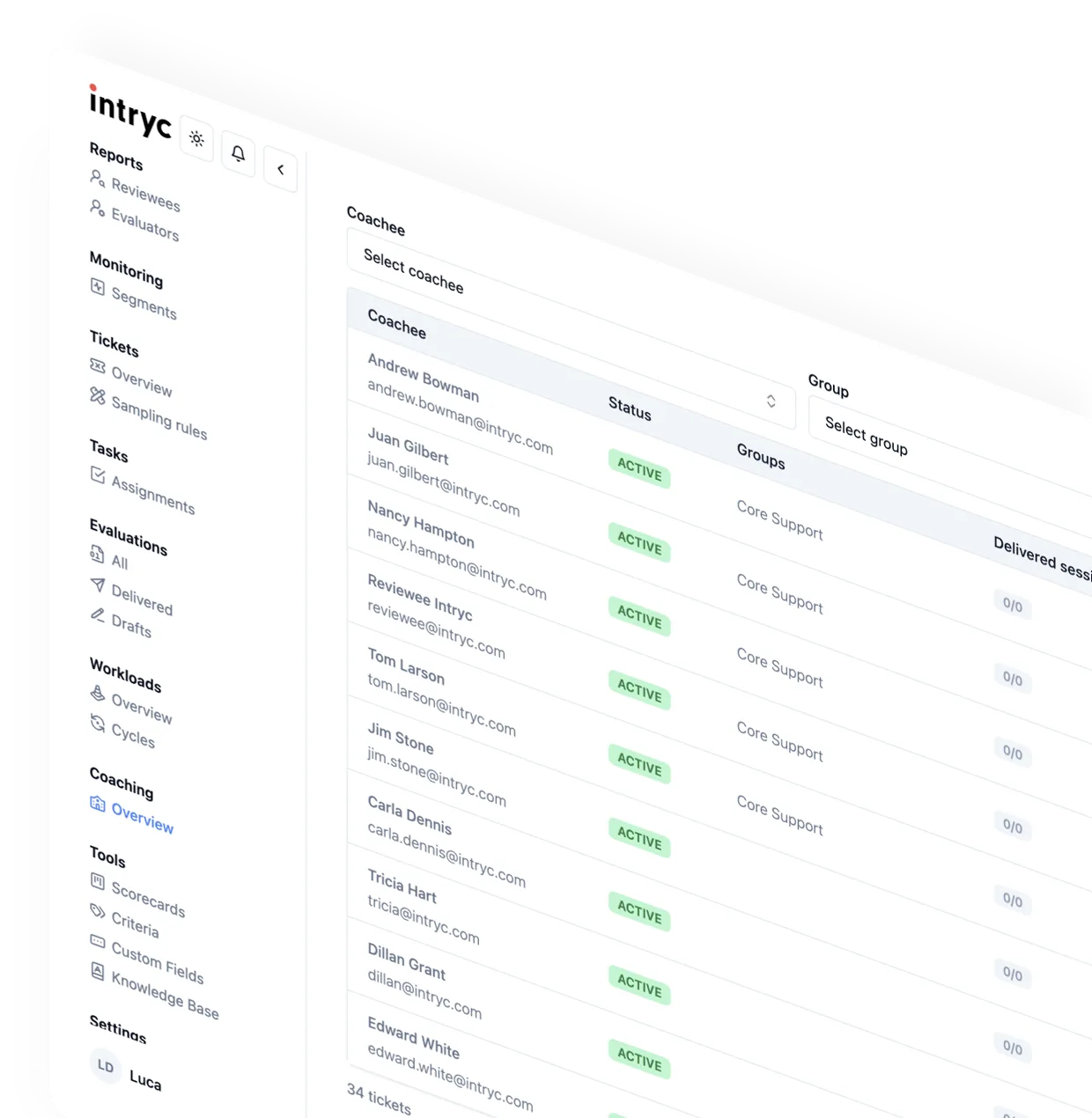
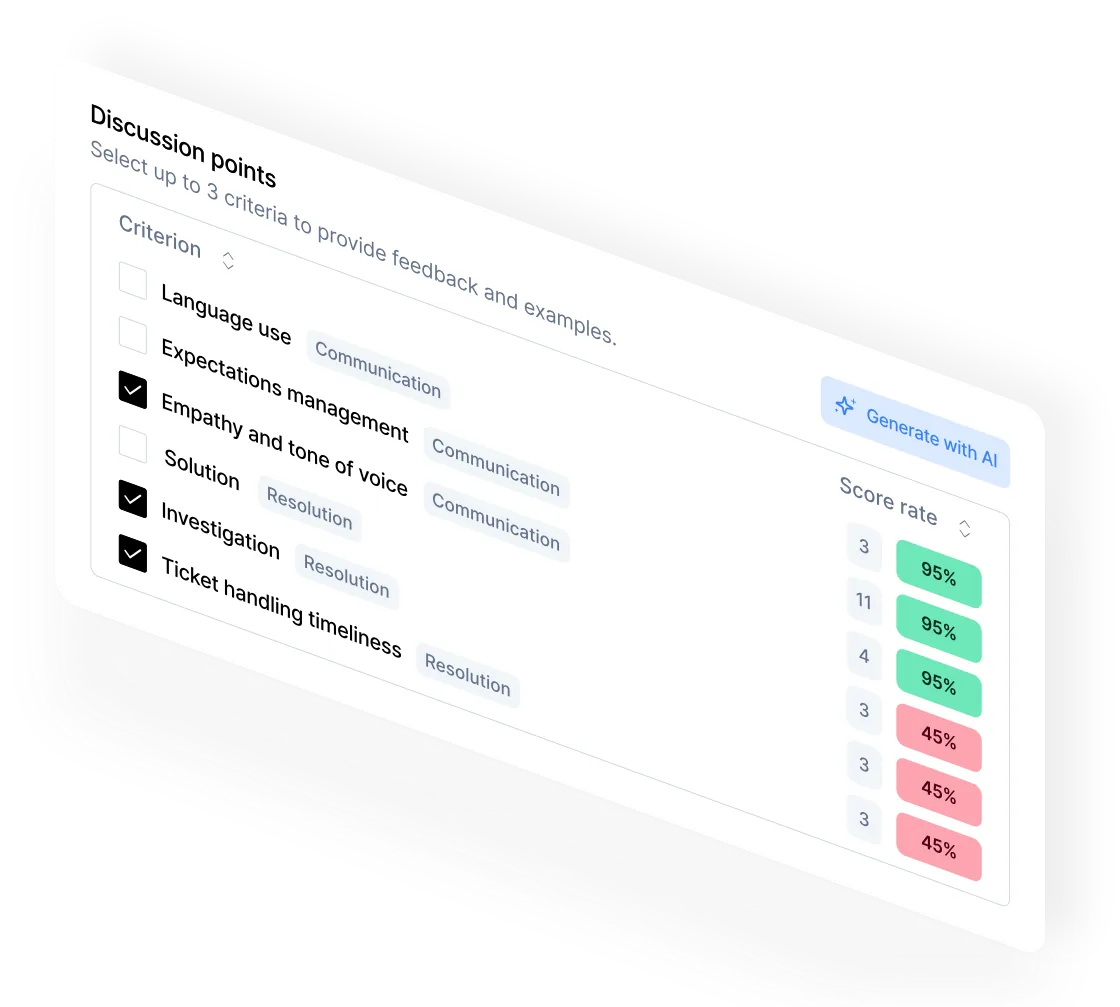
Why it's #1: Intryc is the only platform that generates training content automatically from your actual past tickets. When the AI identifies a gap, it doesn't just report it—it builds a hyper-realistic practice scenario from a real customer interaction your team had before.
Here's the workflow: The AI evaluates 100% of calls and tickets. It sees that Agent A drops calls when customers object to pricing, but handles billing questions fine. Instead of telling Agent A to "improve objection handling," Intryc finds 5 past tickets where pricing objections occurred, generates realistic practice simulations from those tickets, and Agent A spends 15 minutes practicing.
Customer proof: Deel's support team saw a 40% productivity increase and caught 170% more critical cases. Blueground reduced their QA time by 40+ hours per week while improving coverage from 3% to 5.5%. Welcome Pickups cut customer dissatisfaction from 50% to 39% in two months. SadaPay achieved 10x QA efficiency with 95-99% AI-powered audits.
Pros: Auto-generated training from real data, closed-loop improvement, works for human and AI agents, no per-agent fees, under 10 minutes to setup.Cons: Newer platform, smaller installed base than legacy platforms.
2. AmplifAI
AmplifAI is built specifically for contact center coaching and performance management. It uses AI to surface coaching moments from recordings and helps managers create personalized coaching plans for each agent.
Pros: Manager-friendly interface, good for coaching workflows, supportive framing, reasonable pricing.Cons: Still requires managers to identify and create training, doesn't generate simulations, limited measurement of coaching impact.