Industry
Best Root Cause Analysis Software for Customer Support Teams in 2026
Author
Published
Intryc
October 29, 2026
Updated October 2026.
By Alex Marantelos
The best root cause analysis software for customer support in 2026 depends on where the evidence lives and what has to happen after a finding. Intryc is built for teams that want root-cause findings on every conversation - human and AI - tied straight into coaching and training on the same scorecard. EvaluAgent and SentiSum suit teams that want every conversation auto-tagged with a reason for contact. Zendesk QA and ScorebuddyCX suit teams that want root causes inside a QA scorecard they already run. We checked every vendor's own site, docs, or pricing page on October 29, 2026 - not a sales deck - to find out which of them actually do this.
Intryc publishes this guide and lists itself first. Product, pricing, and feature facts below come from each vendor's own site, help center, or pricing page as of October 29, 2026; where a vendor does not publish a fact, this guide says so instead of guessing. This is a buyer's comparison - for how Intryc's own root-cause workflow runs end to end, see Root cause analysis software for support teams.
Root cause analysis software for customer support, compared at a glance (October 2026)
| Platform | Best for | How it finds root causes | Pricing (as published) |
|---|---|---|---|
| Intryc | Support teams that want root-cause findings tied into coaching and training on one scorecard for human and AI agents | Evaluation Insights surfaces a root-cause finding - with the specific conversations and message highlights behind it - when a scorecard criterion trends down | Usage-based, no per-agent or integration fees; Voice Quality Scoring is an add-on |
| Zendesk QA (formerly Klaus) | Teams already running QA scorecards in Zendesk who want structured root causes inside reviews | Reviewers select a root cause from a tiered dropdown - up to three tiers - on each scored review, not an automated clustering pass | Add-on; price not published - the Workforce Engagement Bundle (QA plus Workforce Management) is $50/agent/month billed annually |
| EvaluAgent | Teams that want every conversation auto-tagged with a reason for contact, independent of a QA scorecard | Conversation Intelligence auto-classifies every interaction's reason for contact at scale, with no manual tagging, then lets reviewers drill from symptom to root cause | AutoQM from $35/user/month; adding Conversation Intelligence (reason for contact) is $65/user/month |
| ScorebuddyCX (formerly Scorebuddy) | Contact centres that want root cause analysis inside a configurable QA scorecard plus an embedded LMS | Root Cause Analysis ships on the entry Foundation plan; the Elite plan adds Conversation Analytics across human agents and AI chatbots | Quote-only per-user tiers; 14-day trial |
| SentiSum | Teams whose main goal is explaining CSAT and churn drivers across every conversation | Kyo reads every customer conversation and is built to drill to the root cause rather than stop at a topic tag; agent-level scoring is sold separately as the Quality Agent add-on | Quote-only, annual |
| Lorikeet Coach | Teams running Lorikeet's AI support agent who also want QA and root cause analysis on the tickets it - and their human team - handle | Coach grades every conversation and turns graded tickets into a ranked list of why failures happen, down to a specific knowledge-base article or policy gap | Platform plans from $2,100/month (Start) and $5,100/month (Scale), plus per-ticket rates; 30-day trial |
| CallMiner | Large contact centres that want root cause analysis bundled with broader speech and interaction analytics | Analyze ties root-cause analysis to omnichannel customer journey mapping across voice and digital channels | Quote-only |
What counts as root cause analysis software for customer support?
"Root cause analysis software" is also a name for incident-management tools, manufacturing and EHS root-cause tooling, and fishbone-diagram apps. None of those are what a support QA or CX leader means by the term, and none of them are in this guide.
For customer support, root cause analysis software connects a quality or satisfaction symptom - a scorecard criterion trending down, a spike in repeat contacts, a drop in CSAT - to the pattern behind it: the conversations that show it, the group it is concentrated in, and a corrective action a manager can actually take. The signal is a QA score, a contact reason, or a sentiment drop; the investigation runs on conversations and evaluation data your team already has; the output is a finding with evidence attached, routed to coaching, training, or a process fix.
A platform that cannot point to the specific conversations behind a finding, or that stops at a dashboard with no path into coaching or a workflow fix, does not meet that bar - whatever it calls itself.
Best root cause analysis software: the shortlist
Each entry below states what the vendor's own pages document today, not a feature we assume it has. Where a vendor does not publish a fact we need, we say so and point you to ask in a demo.
1. Intryc - best for root-cause findings tied into coaching and training, for human and AI agents
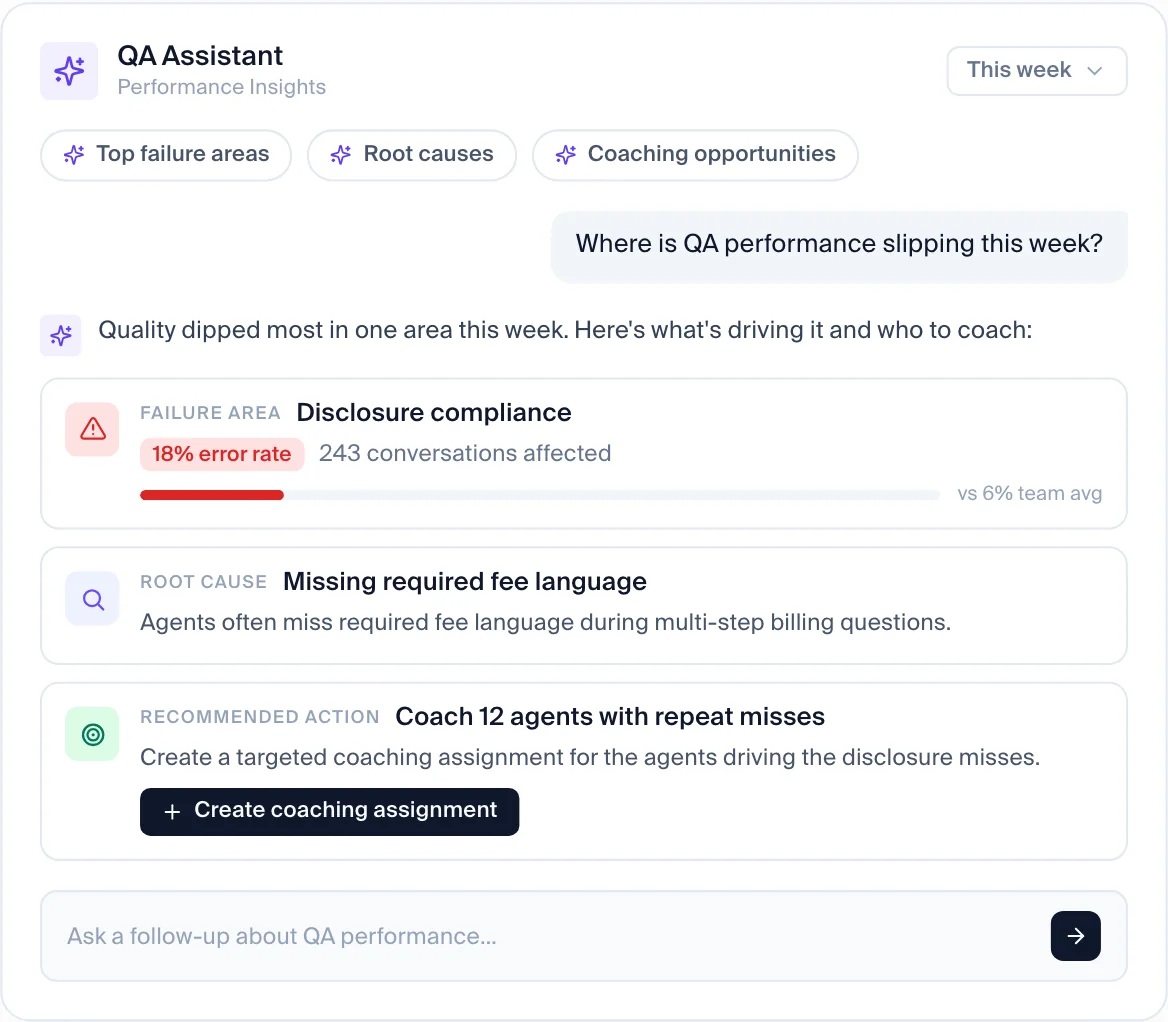
Intryc evaluates every conversation - human and AI - against your own scorecard, then surfaces root causes, examples, and knowledge gaps directly in its reporting rather than leaving you to read transcripts for patterns. Intryc's own platform page states it plainly: the AI "surface[s] root causes, examples, and knowledge gaps," and the Action Center rolls that up into top failure areas and coaching opportunities every week.
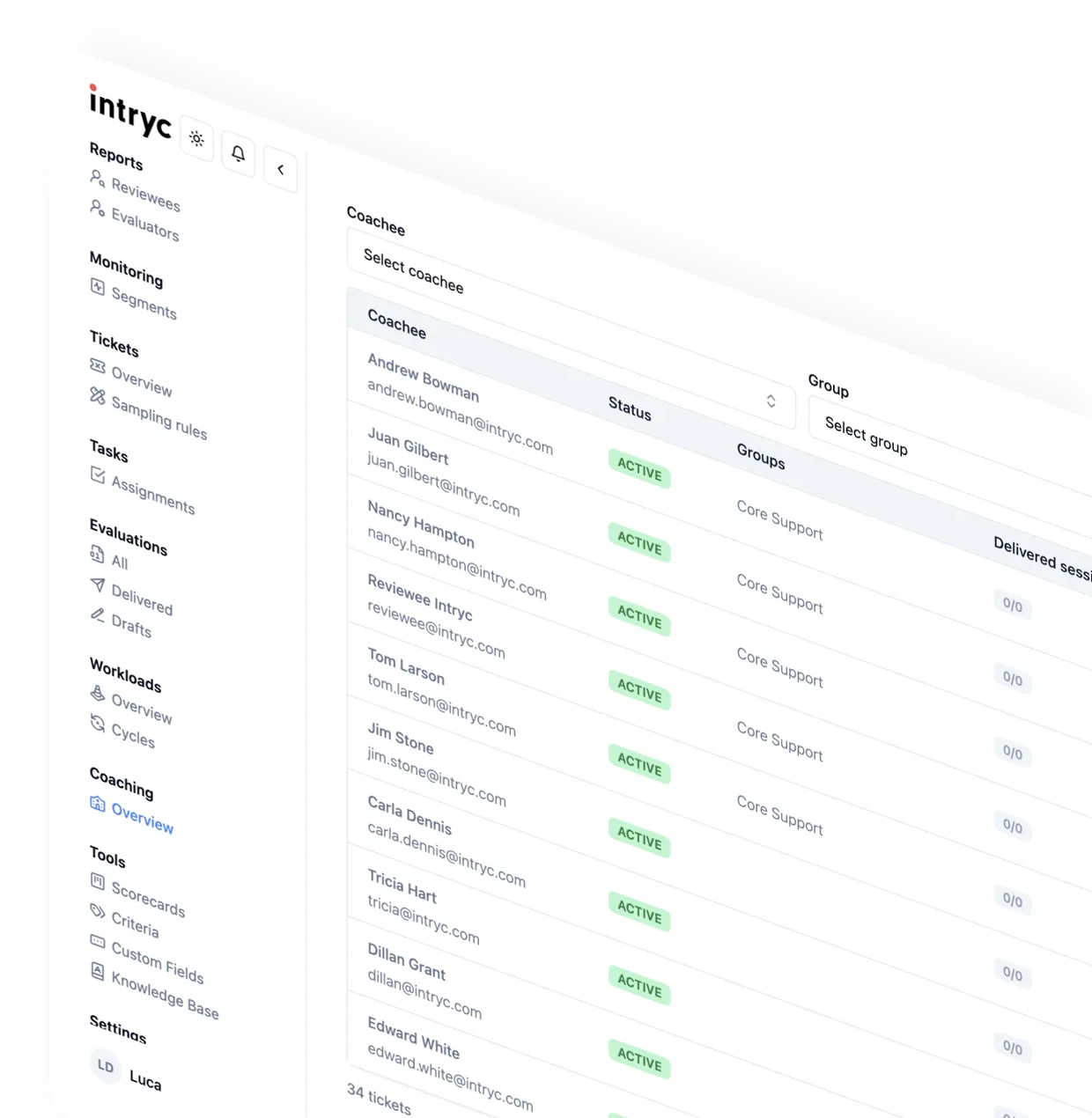
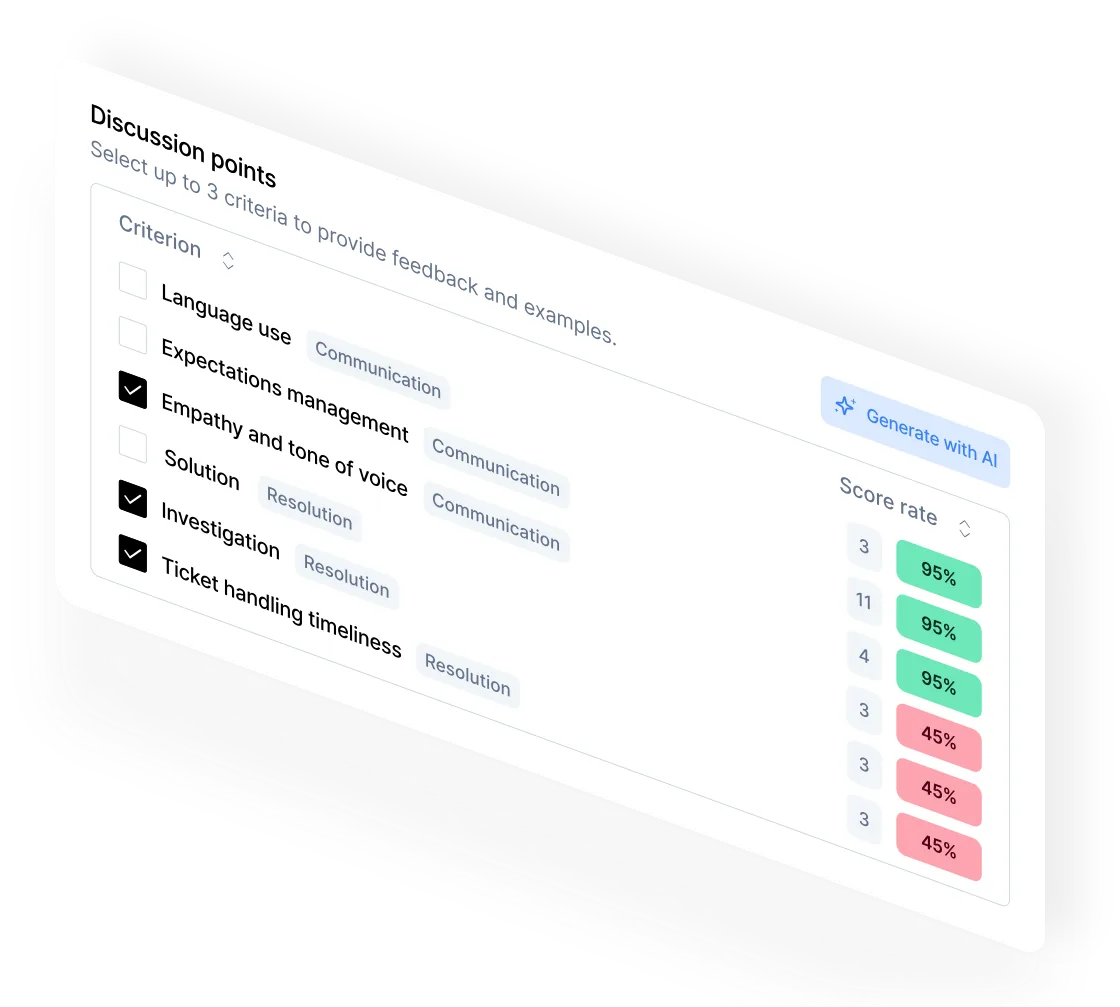
AutoCoaching drafts each session from the agent's real flagged conversations on the criteria a coach selects, links every coaching point to its source ticket, caps the session at six action items, and tracks the agent's score on those same criteria afterward - then the coach reviews and schedules it. Blueground saved 40+ hours a week on manual audits once AutoQA took over ticket selection and scoring, and used that time to introduce coaching for the first time, and Deel doubled QA evaluation capacity without adding headcount. Intryc's platform page also documents that failed evaluations convert directly into targeted simulations and quizzes built on the same flagged criteria, scored by the same AI engine that scores live tickets, so a coaching finding and the training that follows it stay on one record instead of living in a separate LMS.
Pricing: usage-based, with AutoQA, Evaluation Insights, AutoCoaching, and Simulations included and no per-agent or integration fees, typically half the cost of legacy per-agent platforms at the same volume. Voice Quality Scoring is an add-on, and the 90% accuracy - guaranteed promise is contractual on eligible programs.
Scope: Intryc's root-cause layer is QA-derived, which is the point: every finding traces to a scored conversation and its message highlights, across every conversation or the sample you choose. Outage detection stays with your monitoring stack.
Best for: support teams that want QA, root cause analysis, coaching, and training on one scorecard, for human and AI agents - instead of the less than 5% of conversations most QA programs actually review.
2. Zendesk QA (formerly Klaus) - best for root causes inside a scorecard you already run in Zendesk
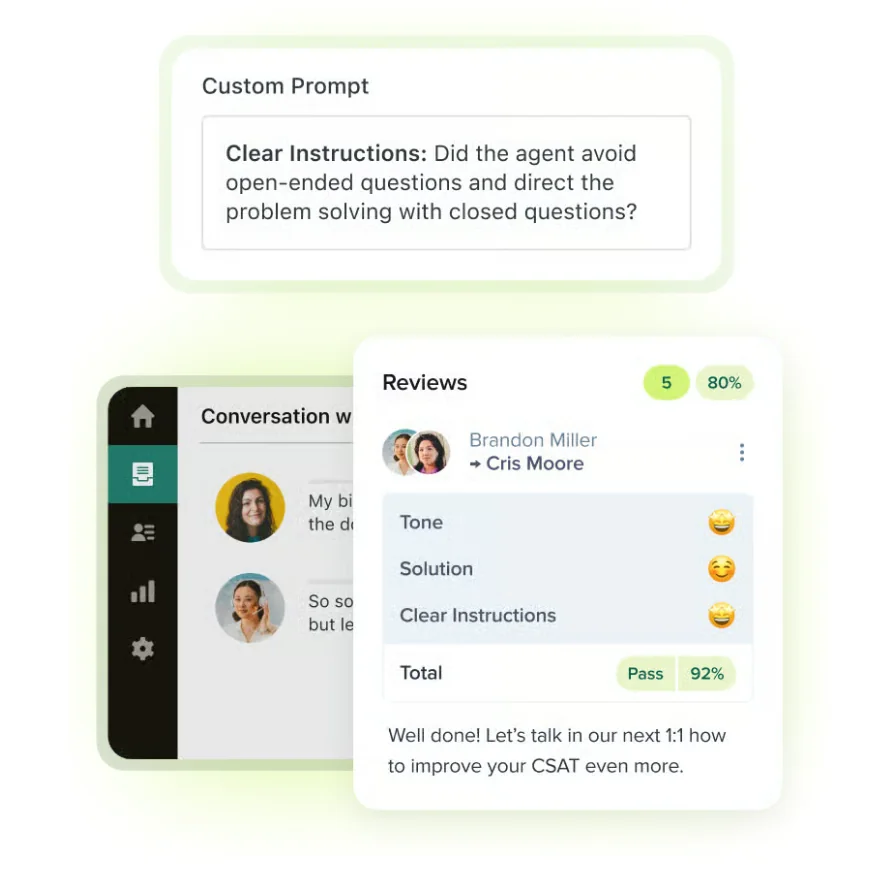
Zendesk QA lets reviewers select a root cause from a structured, tiered dropdown on each scored review - Zendesk's own help center describes "multiple tiered root causes," organized into up to three tiers, so a reviewer picks "technical issue" then narrows to "hardware failure" then to a specific cause. Zendesk also documents QA for AI agents as a separate, named capability. Zendesk QA also ships as part of Zendesk's Workforce Engagement Bundle, which Zendesk's own pricing page lists at $50 per agent per month billed annually - a different packaging from the root-cause-only question above, but the number buyers comparing total QA spend actually need.
Limitation Zendesk QA's own documentation implies: Zendesk QA's root causes are a reviewer's manual selection on each review, not an automated clustering pass across unreviewed conversations - ask Zendesk to show root-cause reporting on a sample you have not hand-tagged before assuming it clusters on its own.
Pricing: add-on; price not published - ask Zendesk.
Best for: teams whose QA program already lives inside Zendesk and wants root causes added to the review workflow they have, not a new platform.
3. EvaluAgent - best for automated reason-for-contact tagging across every channel
EvaluAgent's Conversation Intelligence module auto-classifies every interaction's reason for contact - its own product page says it will "auto-classify every interaction at scale" with "no manual tagging, no sampling" - and lets a reviewer "drill from symptom to cause across conversation data." EvaluAgent also integrates with contact-centre platforms including Genesys, Five9, and Amazon Connect alongside Zendesk, Intercom, Salesforce, and Freshdesk, so the root-cause tagging runs across the same channels a voice-heavy team already has in its stack.
Limitation EvaluAgent's own pricing page implies: that reason-for-contact and root-cause drill-down sits in the Conversation Intelligence tier, not the base AutoQM plan - confirm which tier you are quoted before assuming root cause analysis is included.
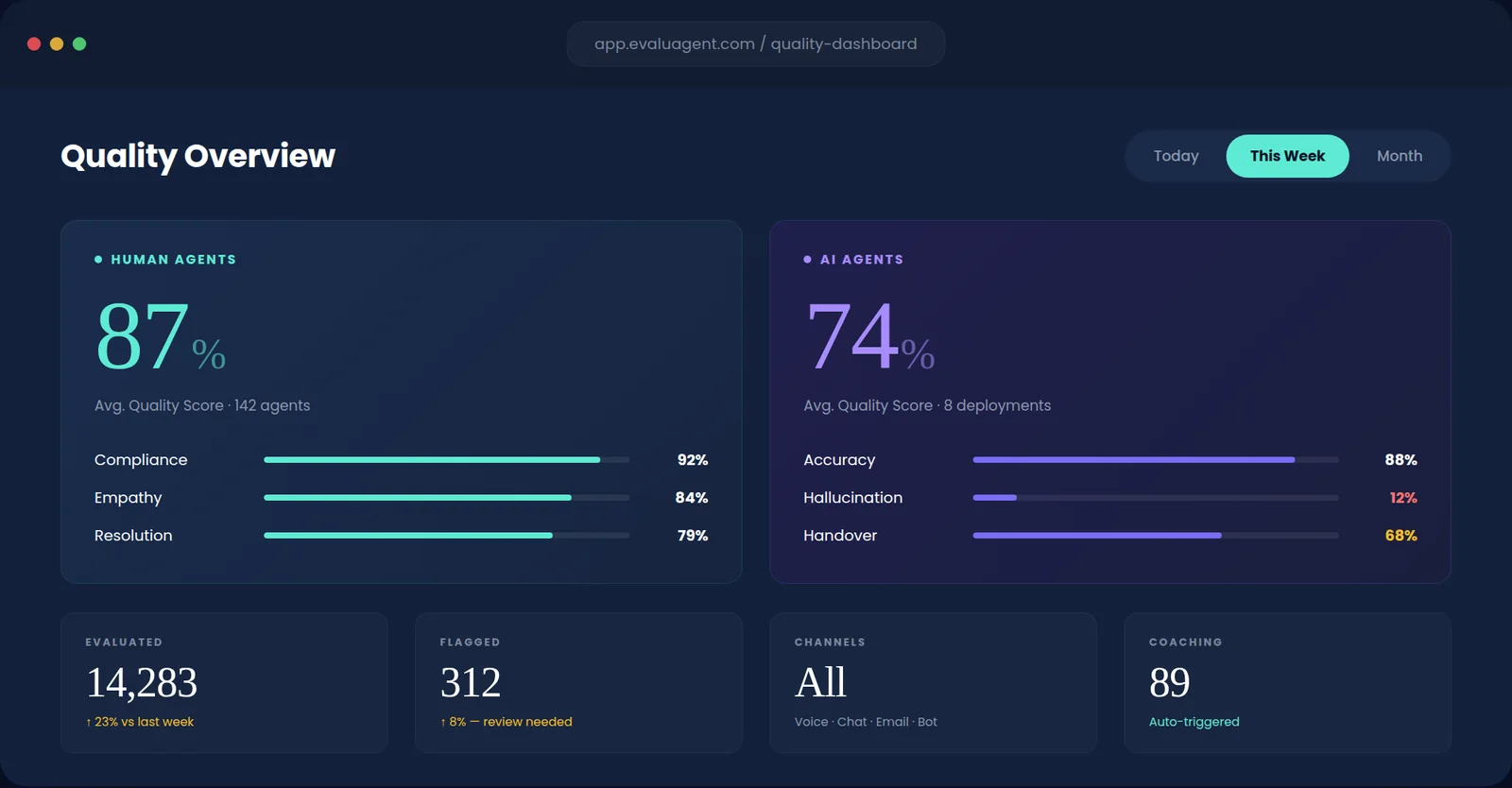
Pricing: AutoQM from $35/user/month; adding Conversation Intelligence (reason for contact, root-cause drill-down) is $65/user/month.
Best for: contact centres that want automated contact-driver tagging on every conversation without redesigning their QA scorecard first.
4. ScorebuddyCX (formerly Scorebuddy) - best for root cause analysis inside a configurable scorecard plus an LMS
ScorebuddyCX lists Root Cause Analysis as a named feature on its entry Foundation plan, alongside customizable scorecards and a calibration module. Its Elite plan adds Conversation Analytics, which the vendor's own site says reviews both human agents and AI chatbots. ScorebuddyCX's integrations page also lists Kustomer and Dixa alongside Genesys, Amazon Connect, NiCE CXone, Five9 and Talkdesk, and extra AI-scoring volume beyond a plan's included allowance is sold as a separate credit add-on.
Limitation ScorebuddyCX's own pricing page implies: Root Cause Analysis and Conversation Analytics are two different tiers - Root Cause Analysis is on Foundation, broader Conversation Analytics (including AI-chatbot review) is Elite-only - confirm which tier includes what you need.
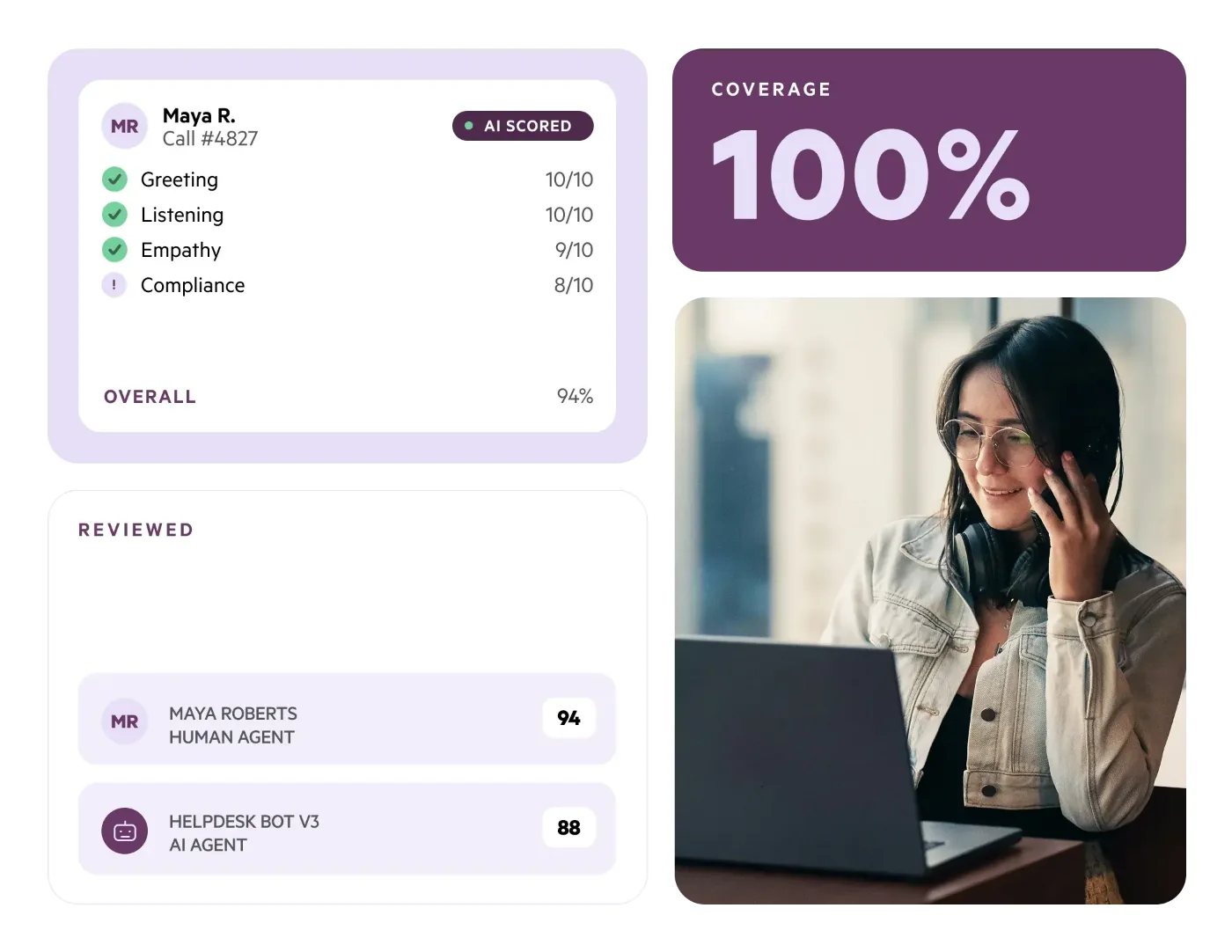
Pricing: quote-only per-user tiers across Foundation, Accelerate, and Elite; a 14-day trial is published.
Best for: contact centres that want root cause analysis bundled with an embedded LMS and CCaaS integrations (Genesys, Amazon Connect, NiCE CXone, Five9, Talkdesk, Dixa).
5. SentiSum - best for explaining CSAT and churn drivers
SentiSum sells agent scoring as a separate Quality Agent add-on; its core Kyo product is CSAT and churn drivers. Its own Insights Agent page frames the job as getting "the 'why' behind every CSAT drop or churn spike," and its Kyo engine is described as reading every customer conversation and drilling to the root cause rather than stopping at a topic tag. It connects to Zendesk, Freshdesk, Intercom, Dixa, and Gorgias, among others. SentiSum's own Insights Agent example report breaks a single finding down into named sub-causes - in its published illustration, a "Cart Functionality Problems" category lists specific drivers like cart-drawer visibility issues, next to a tracked swing of +620% on one metric over a three-month window - which is the level of granularity Kyo is built to produce, not just a top-line churn score.
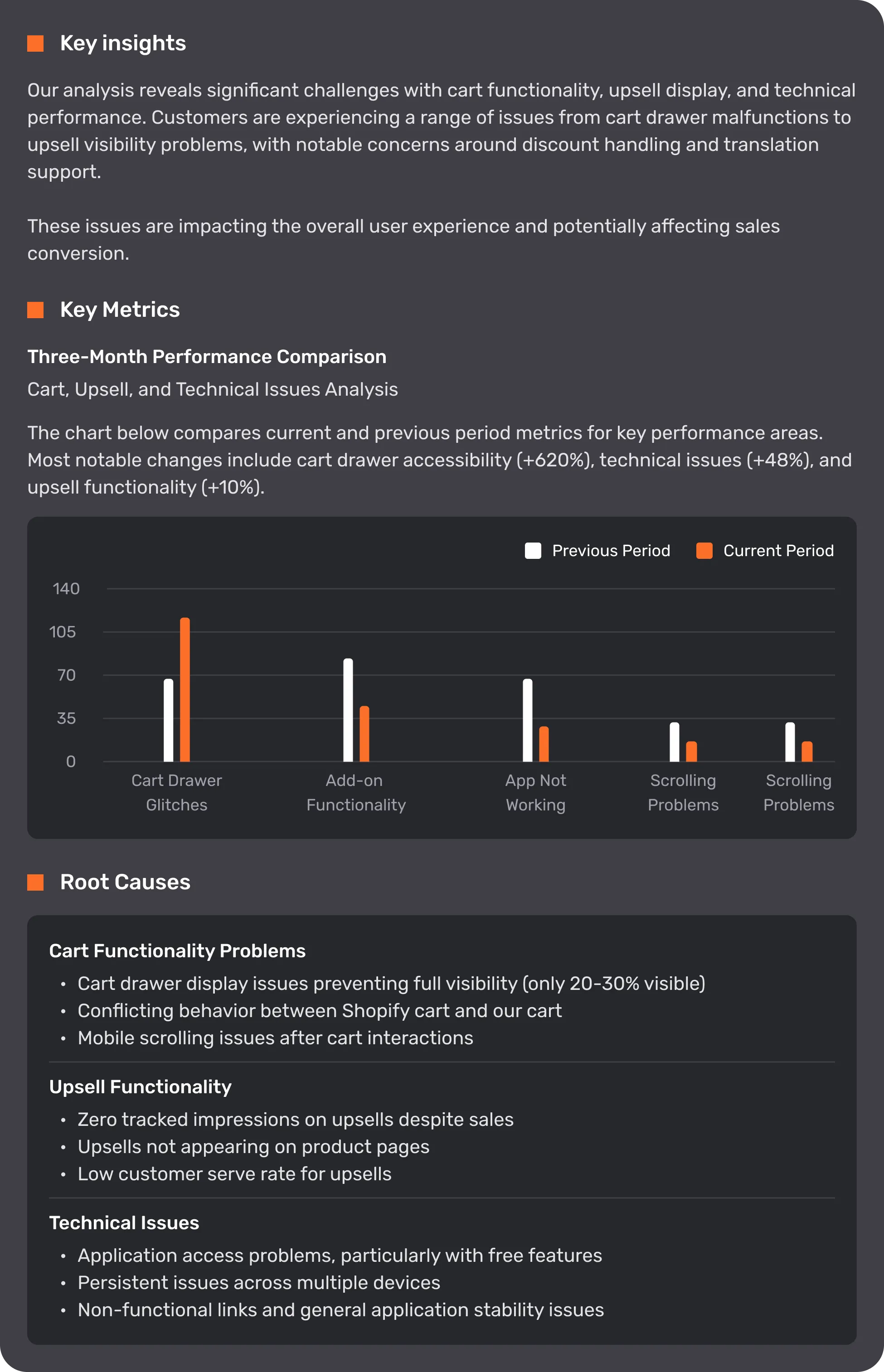
Limitation SentiSum's own pricing page implies: agent-level scoring sits in the separate Quality Agent add-on, not the core Kyo product, and SentiSum's public pages do not lay out a per-agent QA scorecard, criterion weighting, or a coaching-session workflow the way a dedicated QA platform does - ask SentiSum what the Quality Agent add-on includes and how its findings route into agent coaching, not just a leadership dashboard.
Pricing: quote-only, sold as an annual partnership.
Best for: CX and insights teams whose primary question is why contacts or CSAT are moving, not teams whose primary job is running an agent QA program.
6. Lorikeet Coach - best for root cause analysis on an AI support agent's own tickets
Lorikeet Coach is the QA and analytics companion to Lorikeet's own AI support agent, Concierge. Lorikeet's own product page says Coach turns graded tickets into "a ranked list of why failures happen" - a missing knowledge-base article, a broken workflow step, a policy gap - and states that "Coach scores every conversation your Concierge handles, and your human team's too once enabled." Lorikeet's own product page frames the pitch as coverage first: "measure what matters across 100% of AI-handled tickets, not just the tickets that get a CSAT survey response" - and the Coach feed shown on that page tracks findings like a tracked CSAT drop of 23% on one topic over two weeks, alongside the root-cause label and ticket count for each.
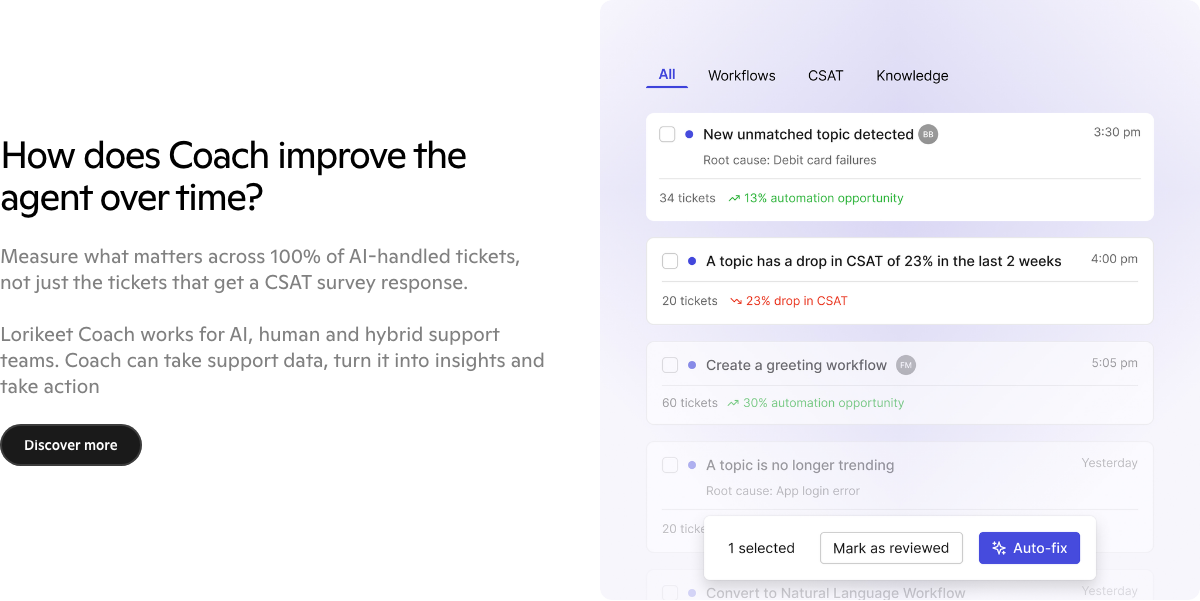
Limitation Lorikeet's own page states directly: human-agent scoring is an opt-in ("once enabled"), and Coach is positioned as the analytics layer for Lorikeet's own AI agent first - confirm it covers your non-Lorikeet helpdesk conversations before treating it as a general QA platform.
Pricing: platform plans from $2,100/month (Start) and $5,100/month (Scale), plus per-ticket rates; 30-day trial.
Best for: teams already running Lorikeet's AI agent who want root cause analysis on the tickets it resolves, extended to their human team.
7. CallMiner - best for root cause analysis inside a broader speech and interaction analytics suite
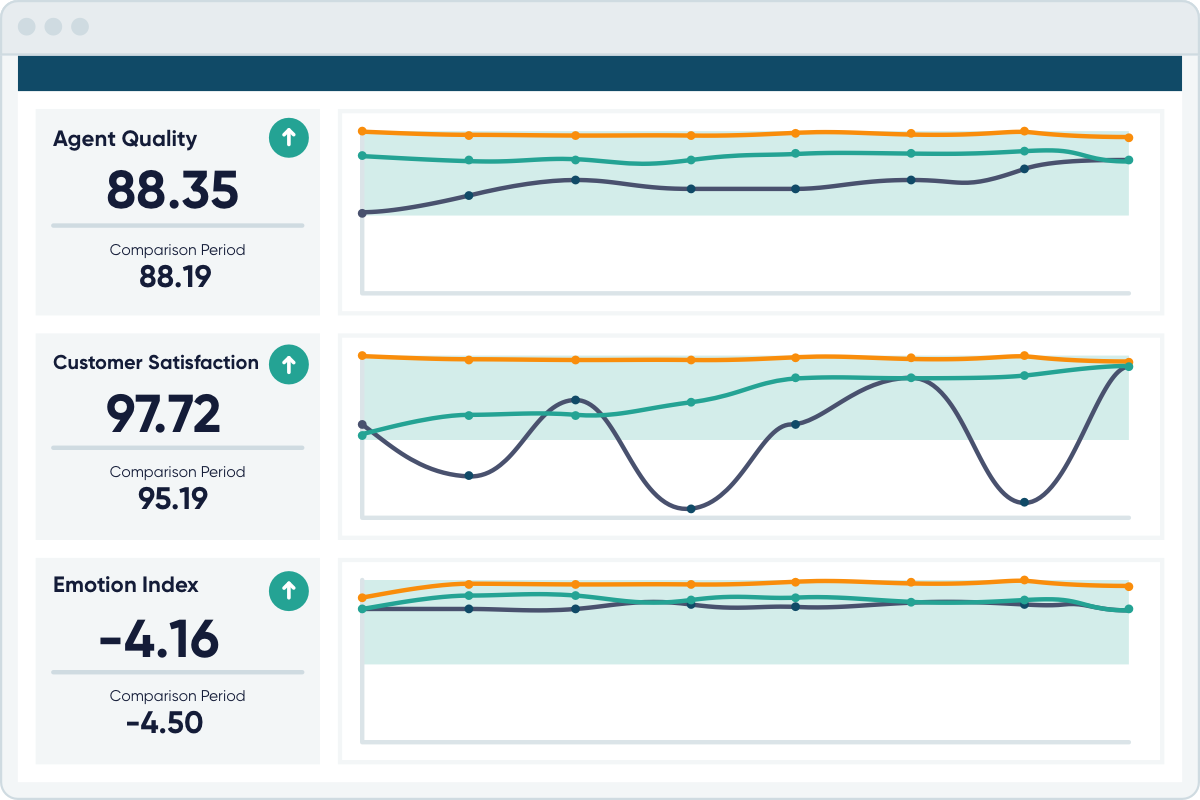
CallMiner's Analyze product leads with root cause analysis as a named capability - its own platform page says Analyze lets teams "better understand conversations with root-cause analysis" alongside omnichannel customer journey mapping, with Quality Management and a Coach product for agent development layered on top. CallMiner's Coach product, the coaching layer that sits next to Analyze, publishes its own illustration of a quality dashboard tracking Agent Quality, Customer Satisfaction, and an Emotion Index score over time against a comparison period.
Limitation CallMiner's own site leaves open: CallMiner does not publish pricing, and its own pages do not state in named terms how its OmniAgent virtual-agent product is scored on the same root-cause framework as human agents - ask CallMiner to show that in a demo rather than assuming parity.
Pricing: not published; quote-only.
Best for: large, voice-heavy contact centres that want root cause analysis as one module inside a broader speech-analytics and quality-management suite they are already evaluating.
How the leading tools compare on support RCA decision criteria
Use this as a worksheet, not a scoreboard. For every row, we state what Intryc supports on its own pages and what to ask every other vendor to show you on your own conversations - a demo on your data settles more of this than any comparison page can.
| Decision criterion | What it determines | Where Intryc stands | What to ask every other vendor |
|---|---|---|---|
| Interaction coverage | Whether findings are based on all conversations or a sample | Evaluates every conversation - human and AI - in real time, or an intelligent attribute-based sample you choose, same accuracy either way | Ask what share of conversations the root-cause finding is actually based on, and whether that is every conversation or a sample |
| Custom scorecard or evaluation framework | Whether root causes are tied to your own quality criteria or a fixed taxonomy | Your scorecard, your rules - unlimited criteria, three modes (weighted, critical, soft), per-criterion weighting | Ask whether root causes are tied to your own scorecard criteria or to the vendor's own fixed category list |
| Evidence drill-down to source conversations | Whether a finding points to the specific tickets that prove it, not just a number | Every root-cause finding links to the specific conversations and message highlights that drove it | Ask to see one root-cause finding drilled down to the three conversations behind it, live |
| Segmentation by agent, team, or ticket type | Whether you can tell if a failure is one agent or systemic | Results slice by agent, team, and ticket type, so a drop can be traced to where it concentrates | Ask whether segmentation is a report filter or a feature you have to request |
| Controllable vs. uncontrollable separation | Whether a tool separates what an agent controlled from what they did not | Separates process adherence and knowledge application (controllable) from customer sentiment arriving into the conversation (uncontrollable) | Ask directly whether the platform distinguishes agent-caused failures from customer-caused dissatisfaction, or reports one blended score |
| AI-agent and chatbot coverage | Whether the chatbot is evaluated as its own agent, not folded into human numbers | Imports AI-agent conversations from Ada, Decagon, and Intercom Fin under the bot's own identity, scored on the same scorecard as humans or its own | Ask whether the AI agent is sampled and scored separately, and on what data it was verified |
| Path from finding to coaching or training | What happens after a root cause is found | AutoCoaching drafts each session from the agent's real flagged conversations on the criteria a coach selects, links every coaching point to its source ticket, caps the session at six action items, and tracks the agent's score on those same criteria afterward - then the coach reviews and schedules it; the same criteria can drive a training simulation | Ask whether a finding becomes a coaching session automatically, or a manager has to build one by hand from the report |
How to choose root cause analysis software for your support QA workflow
The platforms above solve different problems. Work through this sequence before you demo any of them, Intryc included:
- Name the support problem you are actually investigating. A CSAT drop, a spike in repeat contacts, and a compliance gap need different evidence - don't shop for "root cause analysis" in the abstract.
- Map the conversations and QA activity you already have. List every helpdesk, voice, chat, and AI-agent platform you need evaluated, and whether you already run a QA scorecard or are starting from zero.
- Define the quality criteria and segments that matter. Decide what you need to slice by - agent, team, ticket type, language - before you compare tools on segmentation.
- Require evidence-level review of every finding. A root-cause claim with no source conversations behind it is a dashboard number, not an investigation.
- Test whether the tool separates controllable from uncontrollable factors. This is the difference between coaching an agent for something they caused and coaching them for something the customer brought in.
- Pilot the handoff from finding to action. Run one real finding through to a coaching session or a process fix before you sign, and time how much of that path is automatic versus manual.
For teams that want root cause analysis, coaching, and training to stay on one scorecard across human and AI agents - rather than three separate tools - that pilot is exactly what Intryc's onboarding is built around: connect your helpdesk in under 10 minutes, load your own scorecard, and run your first root-cause finding into a real coaching session in the first week.
Where this comparison draws the line
Three vendors that come up in this category are left off the main table above, and here is why, sourced to each vendor's own current pages as of October 29, 2026:
- Solidroad retired AutoQA, its QA product, in September 2026, per its own comparison page - it now sells agent training (simulations and assessments) only, with no QA or root-cause product to compare.
- MaestroQA, now Rippit, documents systemic-pattern language on its QA guide ("the same failure 400 times is probably not 400 coaching problems") but does not use "root cause" as a named feature on its current site the way Zendesk QA, EvaluAgent, ScorebuddyCX, SentiSum, Lorikeet, and CallMiner do - ask Rippit directly whether it reports root causes as a defined field, not just a pattern in its agent-app output.
- Level AI and Observe.AI both publish QA scoring and coaching features, but neither vendor's current homepage or product pages state a root-cause-analysis capability in named terms - we could not verify the claim as of this check, so they are left off a root-cause-specific shortlist, not ruled out as QA tools generally.
This list changes as vendors ship and rebrand. If you know of a first-party page that documents root cause analysis for one of these three, tell us and we will re-check it.
Where Intryc is - and isn't - the best fit
Intryc is the best fit for a support or QA team that wants root cause analysis built on top of a real QA program: every conversation - human and AI - scored against your own scorecard, with findings that link straight to the conversations behind them and into AutoCoaching and Simulations on the same record. That is the specific gap this guide scoped to in the section above: a defensible way to connect quality failures to the conversations, cohorts, and follow-up actions that can fix them.
Intryc is not the best fit for a team whose primary need is company-wide conversation analytics spanning churn, product feedback, and support quality in one tool - SentiSum and Rippit's own pages describe that wider scope, and Intryc's root-cause layer is deliberately QA-derived, not a general-purpose analytics warehouse - every number traces to a scored conversation. It is also not the right starting point for a team that wants root cause analysis bolted onto an AI support agent's own output with no separate QA program - Lorikeet Coach is built for its own agent's output; Intryc imports AI-agent conversations from Ada, Decagon, and Intercom Fin under the bot's own identity and scores them on the same scorecard as your humans. And a team that has already built years of scorecard history inside Zendesk QA or ScorebuddyCX should weigh the cost of migrating that history against what a unified QA-plus-coaching-plus-training loop adds.
Ask any vendor on this page, Intryc included, to run a root-cause finding on a batch of your own tickets before you sign - that single test settles more than any comparison page.
Root cause analysis software FAQ
What evidence can reviewers inspect behind a root-cause finding?
On Intryc, every root-cause finding links to the specific conversations and message highlights that produced it, not just a summary number. Ask every other vendor on this page to show you one finding drilled down to its source conversations before you trust the dashboard.
Which interactions and data sources are included?
Confirm whether a tool covers every conversation or a sample, and which helpdesk, voice, chat, and AI-agent platforms it connects to. Intryc connects to Zendesk, Intercom, Salesforce, Freshdesk, HubSpot, Aircall, Twilio, NiCE CXone, Gorgias, Kustomer, Freshchat, Jira Service Management, Modjo, Plain, Ada, Decagon, and Brainbase Labs, plus a bulk-delivery path for anything not natively supported.
Can teams analyze patterns by agent, team, ticket type, or language?
On Intryc, the same evaluation data slices by agent, team, and ticket type, and runs in any language, in two clicks. Ask each vendor whether segmentation is built in or a custom report request.
How are custom quality criteria handled?
Intryc scorecards support unlimited criteria with three modes - weighted, critical, and soft - your scorecard, your rules. Zendesk QA and ScorebuddyCX also support custom scorecards. SentiSum leads with reason-for-contact and driver analysis rather than a weighted agent scorecard; EvaluAgent (AutoQM) and CallMiner (Quality Management) also run scorecards - confirm how their root-cause layer ties back to your criteria.
Can the workflow distinguish coaching opportunities from uncontrollable drivers?
Intryc separates what an agent controlled - process adherence, knowledge application - from what they did not, such as customer sentiment arriving into the conversation. Ask every vendor directly whether this distinction exists, or whether a low score always reads as an agent problem.
What happens after a pattern is found?
On Intryc, AutoCoaching drafts each session from the agent's real flagged conversations on the criteria a coach selects, links every coaching point to its source ticket, caps the session at six action items, and tracks the agent's score on those same criteria afterward - then the coach reviews and schedules it. The same criteria can drive a training simulation scored by the same engine as live tickets. Lorikeet Coach and ScorebuddyCX's in-app coaching module also route findings into an action; confirm with EvaluAgent, SentiSum, and CallMiner how much of that handoff is automatic versus a report a manager has to act on by hand.
What is the cheapest way to get root cause analysis for support conversations?
Among vendors that publish prices, EvaluAgent's Conversation Intelligence starts at $65/user/month and Lorikeet Coach's platform plans start at $2,100/month (Start) plus per-ticket rates. Intryc, Zendesk QA's add-on, ScorebuddyCX, SentiSum, and CallMiner are usage-based or quote-only, so model your own volume before comparing a per-seat price to a platform-plus-per-ticket one.
Which failure pattern would you find first if every conversation was already scored and the pattern behind it was already attached to the evidence?
Related reading
- Root cause analysis software for support teams - how Intryc's own root-cause workflow runs from AutoQA to Evaluation Insights to AutoCoaching
- Best AI QA software for customer support (2026) - seven platforms compared
- MaestroQA alternatives - six QA platforms compared after the Rippit rebrand
- Scorebuddy alternatives - five options compared, with a pilot checklist
- Blueground case study